
Lemon Icebox Chantilly Cake
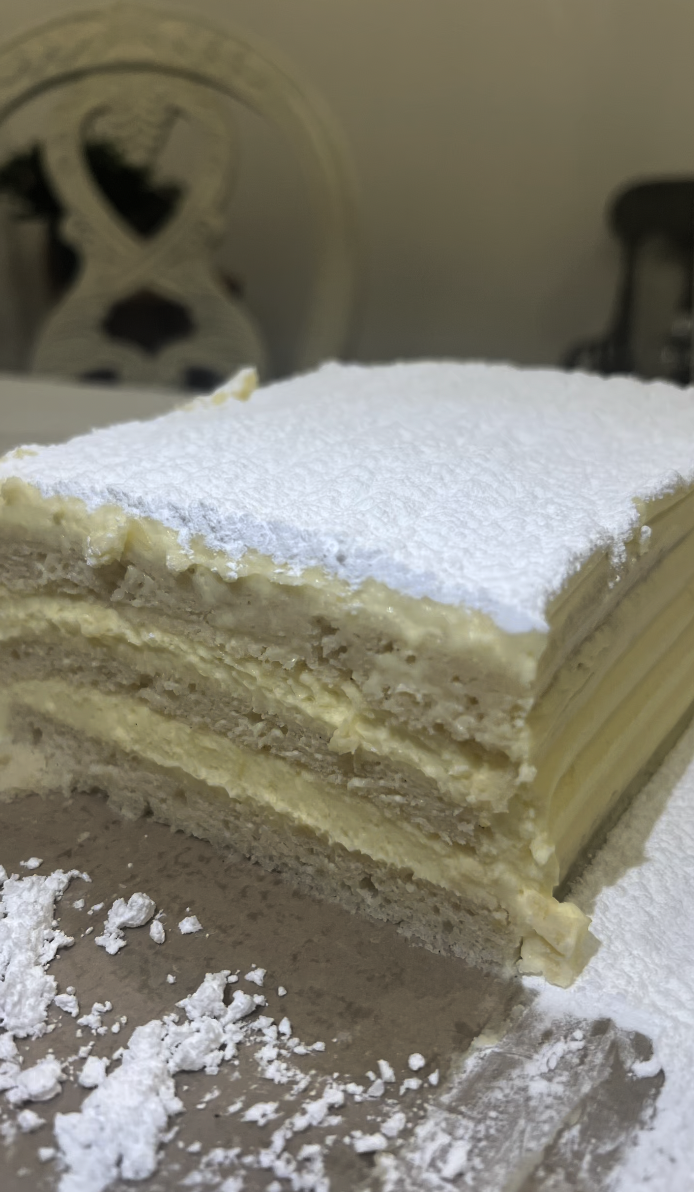
This is the cake that earns its place at every celebratory table without asking for much in return. A thin, tender sheet cake made with whole milk ricotta and lemon sugar — made by rubbing fresh lemon zest directly into the granulated sugar before creaming it with butter, which releases the essential oils from the zest and infuses the entire batter with a bright, concentrated lemon flavor that extract alone can’t produce. That cake, baked on a sheet pan and cut into three layers, stacked and filled and frosted with a lemon Chantilly icing built on heavy cream, cream cheese, and lemon instant pudding that sets into something impossibly light and silky. Refrigerated for at least three hours until every layer has melded together into the soft, creamy, cold-from-the-fridge texture that defines an icebox cake at its best.
A Quick Look At The Recipe
- Recipe Name: Lemon Icebox Chantilly Cake (Creamy Layered Dessert)
- Main Ingredients: 1½ cups all-purpose flour, baking soda, salt, butter, sugar, Zest of 2 lemons, Juice of 2 lemons
- Why You'll Love It: This lemon icebox Chantilly cake layers soft lemon ricotta sheet cake with a fluffy lemon Chantilly icing made with cream cheese and lemon pudding. Best served chilled.
The Chantilly icing is the version of this recipe from the Chantilly Fruit Dip, adapted with lemon pudding and lemon juice to match the brightness of the ricotta cake. It’s lightly sweet, slightly tangy from the cream cheese, and deeply fragrant with lemon in a way that pudding mix alone with no fresh zest and juice couldn’t produce. Together they make a cake that looks elegant, tastes extraordinary, and gets genuinely better with every hour it spends chilling in the refrigerator.
Why You’ll Love This Recipe
The lemon sugar technique is the detail that makes the cake exceptional. Rubbing lemon zest into granulated sugar before creaming it with butter releases the essential oils from the zest cells and distributes them throughout the sugar and then the entire batter. The result is a more intensely and evenly lemon-flavored cake than one made with zest stirred in at the end.
The ricotta makes the texture uniquely tender. Whole milk ricotta adds moisture and a delicate, slightly creamy crumb to the cake that butter and eggs alone don’t produce. It’s the ingredient that makes people ask what’s in the cake.
The Chantilly lemon icing is the same formula that works every time. Heavy cream, cream cheese, milk, and pudding mix beaten to stiff peaks produces a frosting that is light, stable, and deeply flavored without any of the heaviness of buttercream.
It gets better the longer it chills. Three hours is the minimum. Overnight is exceptional. The cold, melded, slightly compressed layers of this cake after a full overnight chill are the definition of what an icebox cake should be.
It feeds a crowd from one sheet pan. A full batch makes a generous layered cake that serves 10 to 12 people without requiring any special round cake pans or advanced frosting technique.
Ingredients Needed to Make Lemon Icebox Chantilly Cake
Two components with intentional ingredient choices throughout. Here’s what you need:
The Lemon Ricotta Cake
- All-purpose flour (the structure of the cake)
- Baking soda (the leavener)
- Salt (balances and sharpens all the lemon and sweetness)
- Butter, room temperature (creamed with the lemon sugar for a light, airy base)
- Sugar and lemon zest (combined and rubbed together first to release the essential oils from the zest; this is the technique that makes the cake intensely lemon-flavored throughout)
- Lemon juice, divided (one lemon’s worth goes into the lemon sugar, the other is used in the batter)
- Vanilla extract and lemon extract (both present for a rounded, complex lemon flavor)
- Whole milk ricotta, room temperature (adds moisture, tenderness, and a subtle creaminess to the crumb)
- Eggs
The Chantilly Lemon Icing
- Heavy whipping cream (the airy, light base of the icing)
- Milk (thins the mixture slightly for smoother incorporation)
- Sugar
- Family-size lemon instant pudding mix (added slowly while mixing; thickens and stabilizes the icing while adding concentrated lemon flavor)
- Vanilla extract and almond extract (the classic Chantilly icing extracts that add depth and a slightly floral note)
- Lemon zest and fresh lemon juice (added for brightness and fresh citrus flavor)
- Whipped cream cheese (adds tang, richness, and stability to the icing)
How to Make Lemon Icebox Chantilly Cake
Three stages, all manageable.
Step 1: Make the Lemon Sugar
In a large bowl, combine the granulated sugar and the zest of both lemons. Using your fingertips, rub the zest into the sugar vigorously for 1 to 2 full minutes. You’ll see and smell the change as the oils release — the sugar will become slightly damp, more yellow, and intensely fragrant. Add the juice of one lemon and mix again. This lemon sugar is the foundation of the cake’s flavor and it cannot be replicated by simply adding zest to the batter at the end of mixing.
Step 2: Make the Cake Batter
In a large bowl, cream the softened butter and the prepared lemon sugar together on medium-high speed until light, pale, and fluffy, about 3 to 4 minutes. Add the eggs one at a time, mixing well after each addition. Add the vanilla extract, lemon extract, and the remaining lemon juice. Add the room temperature ricotta and mix to combine. The batter may look slightly broken or curdled at this point — this is normal and will resolve once the flour goes in.
In a separate bowl, whisk together the flour, baking soda, and salt. Gradually add the dry ingredients to the wet mixture in two or three additions, folding gently until just combined with no dry streaks remaining.
Step 3: Bake the Cake
Line a standard rimmed baking sheet with parchment paper. Pour the batter onto the parchment and spread it into a thin, even layer that covers the entire pan. The batter will be thick but spreadable. Bake at 350°F for about 20 minutes until the center is fully set and a toothpick comes out clean. The edges will be lightly golden. Let the cake cool completely on the pan before cutting. Cutting into a warm cake will cause it to tear and fall apart during assembly.
Step 4: Make the Chantilly Lemon Icing
Add the heavy whipping cream, milk, sugar, vanilla extract, almond extract, lemon zest, and lemon juice to a large mixing bowl. Beat on high speed for about 1 minute until the mixture is smooth, well combined, and beginning to thicken slightly. Reduce to medium-high speed and slowly add the lemon instant pudding mix a tablespoon at a time with the mixer running. Adding it gradually prevents clumping and ensures it incorporates smoothly. Continue mixing as the icing thickens into soft peaks. Add the whipped cream cheese and continue beating until the icing is light, fluffy, and holds firm stiff peaks, about 2 to 3 minutes more. Stop as soon as stiff peaks form.
Step 5: Assemble the Layers
Cut the completely cooled sheet cake into three equal sections. Lay a fresh sheet of parchment paper on a cutting board or serving platter. Place the first cake section on the parchment. Spread a generous layer of Chantilly lemon icing evenly over the surface, going all the way to the edges. Place the second cake section on top and repeat. Add the third cake section and frost the top and sides of the entire assembled cake with the remaining icing, smoothing it as evenly as possible.
Step 6: Chill and Serve
Lightly dust the top of the frosted cake with powdered sugar. Refrigerate for at least 3 hours, and preferably overnight, before serving. The cake needs this chill time for the icing to firm up completely, the layers to compress and adhere, and the lemon flavor to develop and deepen throughout every component. Serve cold directly from the refrigerator.
Storing
Store covered in the refrigerator for up to 4 days. The cake maintains excellent texture and flavor throughout the storage window and most people find it even better on day two than the day it’s made. Cover with plastic wrap pressed gently against the surface of the icing to prevent it from drying out or absorbing refrigerator odors.
This cake does not freeze well. The Chantilly icing separates and becomes grainy after freezing and the ricotta cake can become watery upon thawing.
How to Serve Lemon Icebox Chantilly Cake
Serve cold, sliced into generous pieces with a few fresh lemon slices or a small cluster of fresh blueberries or raspberries alongside each plate. The pale yellow cake and white Chantilly icing look clean and elegant with the natural color of fresh berries against them.
Frequently Asked Questions About Lemon Icebox Chantilly Cake
What is an icebox cake?
An icebox cake is any layered dessert that is assembled and then refrigerated for several hours before serving rather than baked as a completed, immediately servable dessert. The chill time is what defines the category — the layers soften and compress and the filling or frosting firms up and melds with the cake layers into a unified texture that can’t be achieved freshly assembled. The name comes from the era before modern refrigeration when ice boxes were used to keep food cold.
Why rub the lemon zest into the sugar?
Lemon zest contains essential oils in small glands on the surface of the peel. These oils are responsible for the intense lemon fragrance and flavor of fresh zest. When you rub zest into sugar, the friction breaks open those oil glands and releases the oils directly into the sugar crystals, which then carry and distribute that concentrated lemon flavor throughout the entire batter during creaming. Simply stirring zest into batter at the end of mixing doesn’t extract the oils as efficiently and produces a less intensely lemon-flavored result.
Why does the batter look curdled when I add the ricotta?
The slightly curdled appearance when ricotta is mixed into the creamed butter and egg mixture is completely normal and expected. It happens because the ricotta has a different fat and water content than the other ingredients and they haven’t yet fully emulsified. Once the flour is folded in it provides the structure that brings everything together into a smooth, cohesive batter. Do not add more flour or change anything about the recipe when you see this. Continue as directed and the final cake will be perfectly smooth and tender.
Lemon Icebox Chantilly Cake (Creamy Layered Dessert)
Ingredients
Method
- In a bowl, combine the sugar and lemon zest. Using your fingers, rub them together vigorously to release the natural oils from the zest into the sugar. Add the juice of one lemon and mix again. Set aside.
- In a large bowl, cream together the butter and lemon sugar until light and fluffy.
- Add the eggs one at a time, mixing well after each addition. Stir in the vanilla extract, lemon extract, and ricotta cheese. (The mixture may look slightly curdled—this is normal.)
- In a separate bowl, whisk together the flour, baking soda, and salt. Gradually add the dry ingredients to the wet mixture until fully combined.
- Spread the batter evenly onto a parchment-lined baking sheet, keeping it thin and even.
- Bake at 350°F for approximately 20 minutes, or until the center is fully set. Allow the cake to cool completely.
- In a large mixing bowl, combine the heavy whipping cream, milk, sugar, vanilla extract, almond extract, lemon zest, and lemon juice.
- Mix on high speed for about 1 minute until fully incorporated.
- Reduce speed to medium-high and slowly add in the lemon instant pudding mix, a little at a time. Continue mixing as the icing begins to thicken.
- Once soft peaks form, add the whipped cream cheese and continue whipping until light, fluffy, and stiff peaks form (about 2–3 minutes total). Do not overmix.
- Once cooled, cut the cake into three equal sections (about 5-inch sections if using a sheet pan).
- Frost the top and sides of the cake with the remaining icing.
- Lightly dust with confectioners’ sugar.
- Refrigerate for at least 3 hours or overnight.
- Serve chilled for the best texture—soft, creamy, and perfectly infused with bright lemon flavor.